
Looking for a Creative Director?
If you are reading this page, it's because I really want to work with you.
Brands rarely communicate through a single channel. They exist across marketing campaigns, sales conversations, digital platforms, physical spaces and customer experiences. My work focuses on bringing these touchpoints together through cohesive design systems that help organizations communicate with greater clarity, consistency and impact.
With a background spanning branding, marketing communications and spatial design, I help businesses transform complex ideas into meaningful experiences that strengthen relationships with customers, partners and internal teams. Whether developing a brand system, supporting a product launch or designing a branded environment, the goal remains the same: create communication that serves both business objectives and human understanding.
About me
My career began in graphic design and illustration in the early 1990s and gradually evolved into creative leadership, managing multidisciplinary projects across branding, marketing and environmental design. Over the years, I have contributed to projects ranging from visual identity systems and integrated campaigns to exhibitions, retail environments, corporate spaces and large-scale architectural experiences.
Working alongside marketing teams, business stakeholders and production partners has shaped a practical approach to design—one that balances strategic thinking, operational realities and attention to detail. This perspective has been particularly valuable in industries where communication must support complex products, long sales cycles and diverse audiences.
Today, I bring together experience in brand development, visual communication and team collaboration to help organizations build stronger, more coherent experiences across every point of contact. My focus is not only on how things look, but on how design can create alignment, understanding and lasting value.
MY TOP 5'S
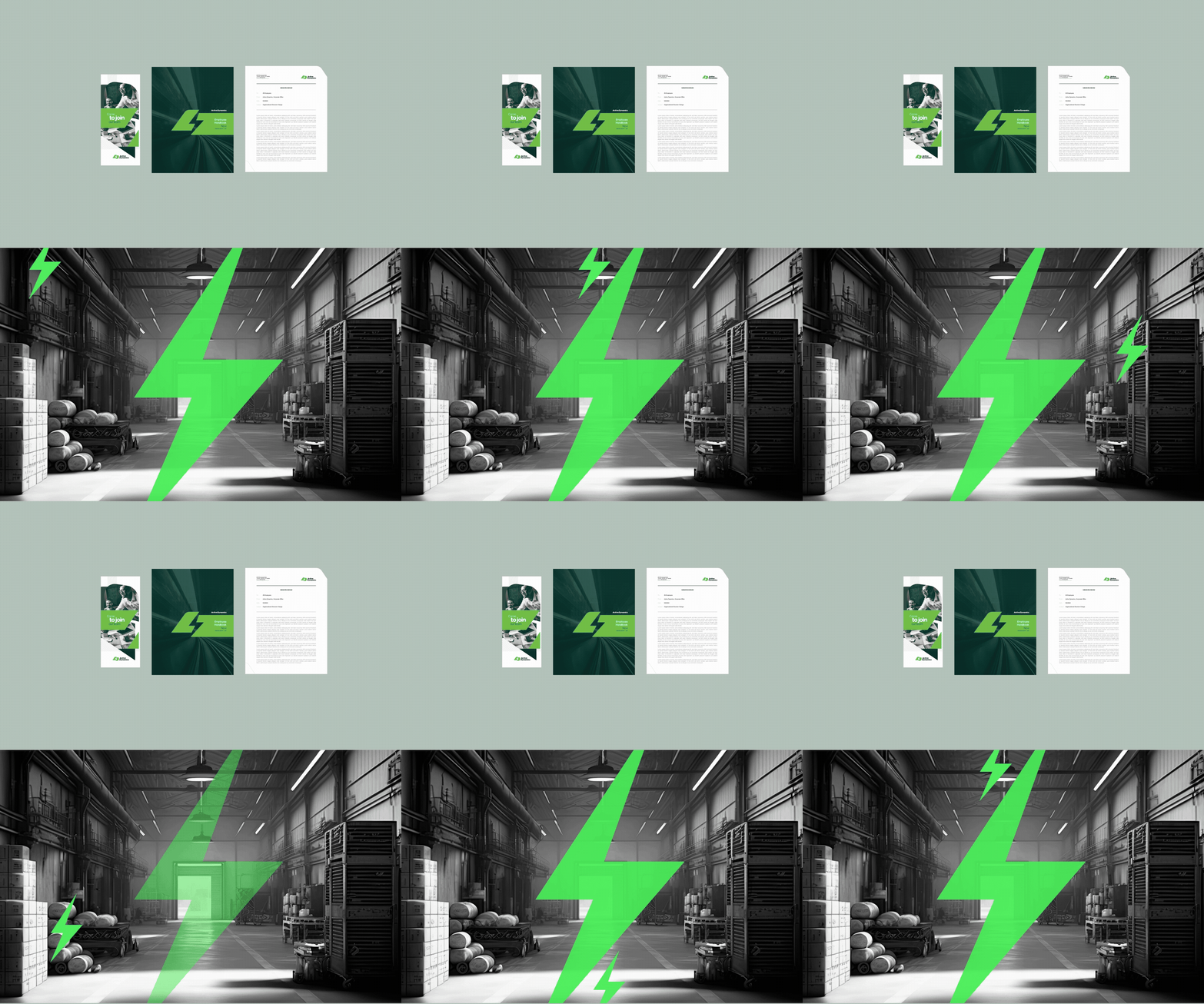
Rebranding for Active Dynamics
Challenge
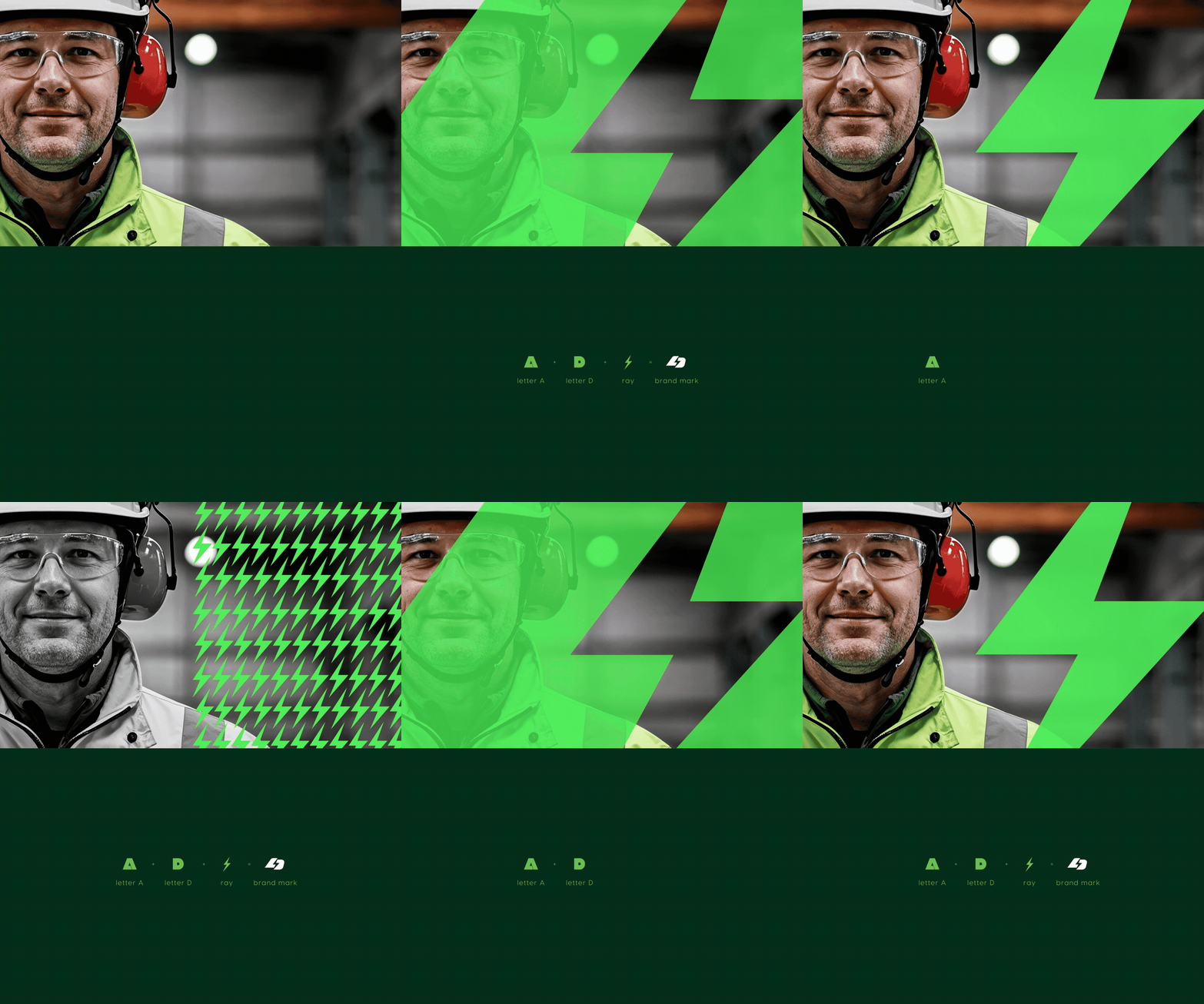
Active Dynamics, an OEM specializing in emissions control, fluid dynamics, and sound performance, needed a new brand system that should reflects the company’s focus on innovation and its growing global presence.
Strategy
To reflect the robustness of the products, a unique and powerful format was developed. With very thick lines, it brings the necessary weight to convey the durability and quality of the products. The result is a robust and energetic logo that reflects the values and attributes of the brand, as well as the products marketed by Active Dynamics.
Execution
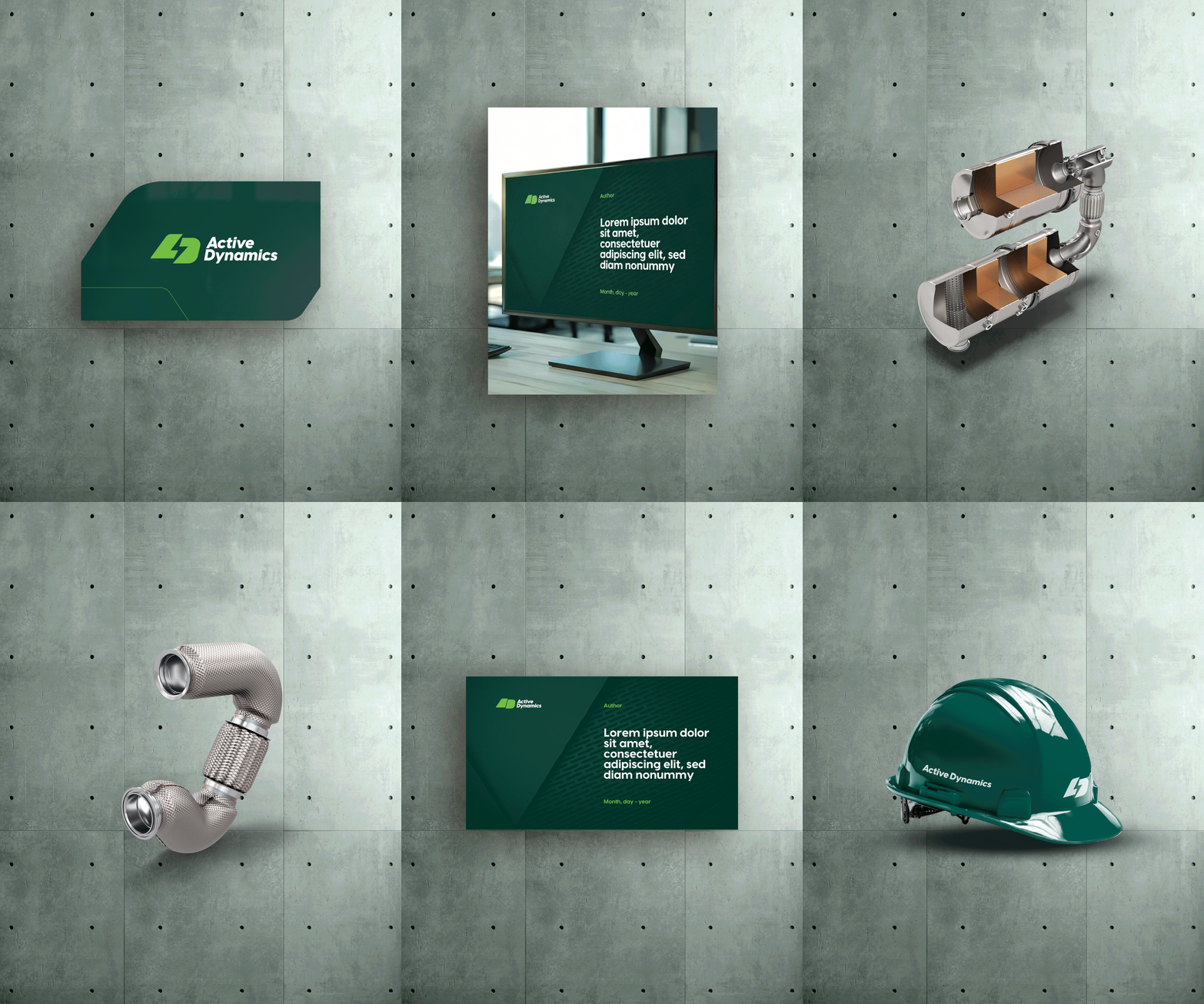
Seeking to stand out, we incorporated a dynamic design system that has the ability to use its shape, its negative form, colors, and texts adapted to different contexts. Unlike common logos, it has the freedom to undergo significant transformation.
Thus, the basic logo design is widely used. But, each time there is a need to represent a different situation, the logo can transform and adapt to different styles.
Thus, the basic logo design is widely used. But, each time there is a need to represent a different situation, the logo can transform and adapt to different styles.
Results
The solution is a flexible and energetic corporate identity framework, designed to function consistently across physical products and digital platforms, and stands out in the diverse B2B markets served by the company.

CASE 2/5
B2B Industrial Communication
Challenge
Active Dynamics, an OEM specializing in emissions control, fluid dynamics, and sound performance, needed a new brand system that should reflects the company’s focus on innovation and its growing global presence.
Strategy
To reflect the robustness of the products, a unique and powerful format was developed. With very thick lines, it brings the necessary weight to convey the durability and quality of the products. The result is a robust and energetic logo that reflects the values and attributes of the brand, as well as the products marketed by Active Dynamics.
Execution
Seeking to stand out, we incorporated a dynamic design system that has the ability to use its shape, its negative form, colors, and texts adapted to different contexts. Unlike common logos, it has the freedom to undergo significant transformation.
Thus, the basic logo design is widely used. But, each time there is a need to represent a different situation, the logo can transform and adapt to different styles.
Thus, the basic logo design is widely used. But, each time there is a need to represent a different situation, the logo can transform and adapt to different styles.
Results
The solution is a flexible and energetic corporate identity framework, designed to function consistently across physical products and digital platforms, and stands out in the diverse B2B markets served by the company.
CASE 3/5
Electrolux Global Retail Experience System
Challenge
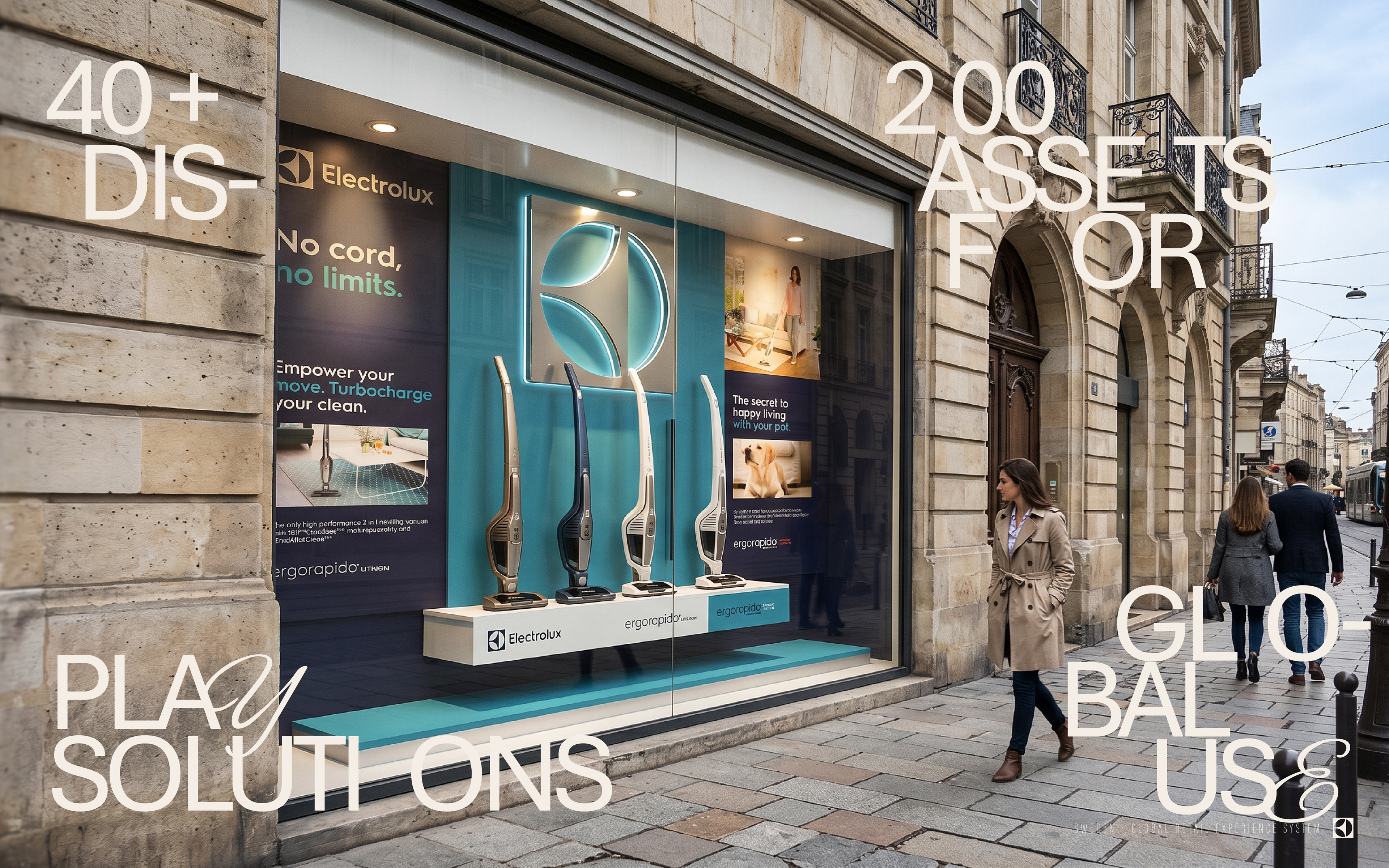
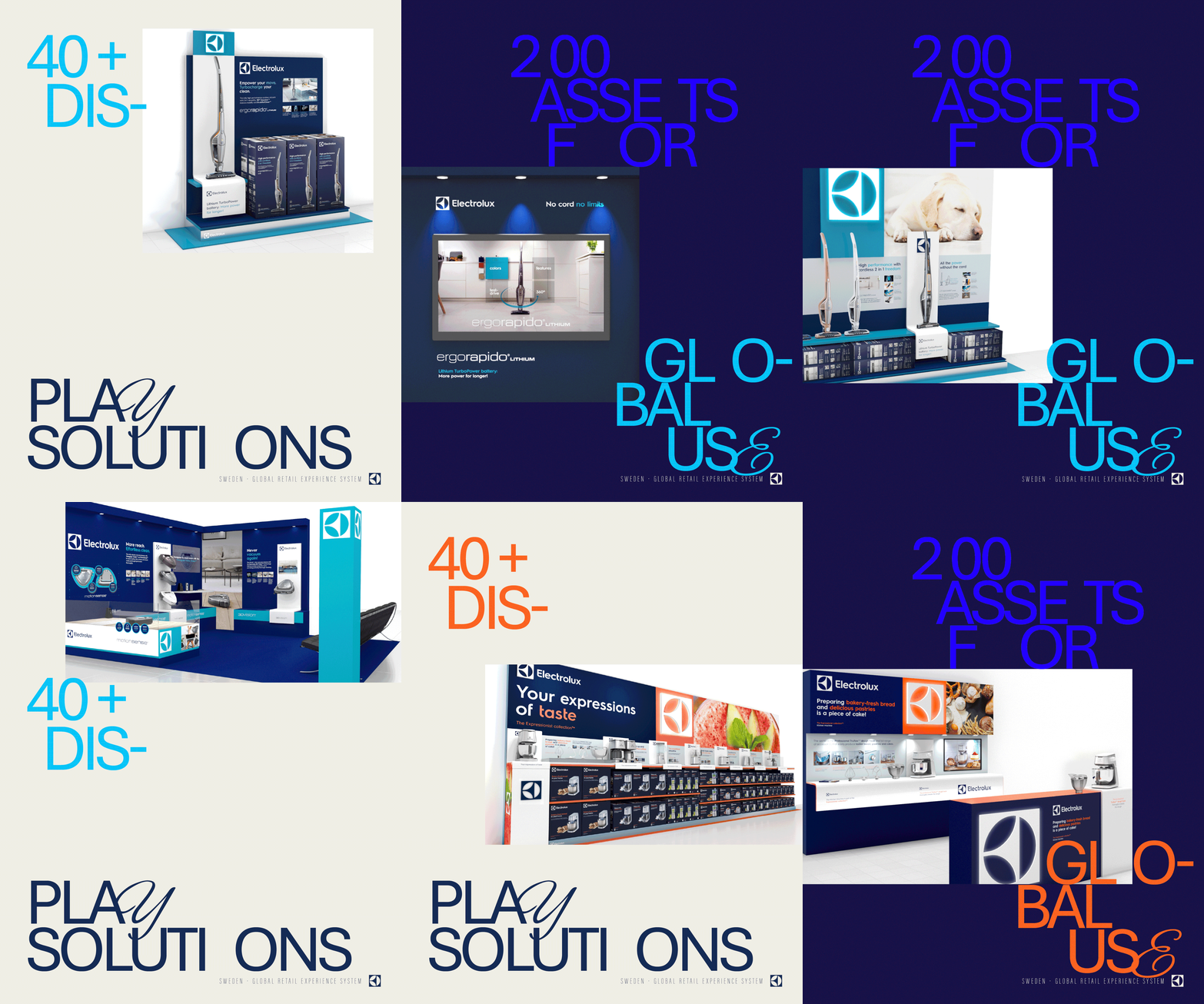
Following the launch of its new global brand identity, Electrolux initiated a large-scale effort to standardize all retail displays and POS materials worldwide. The challenge was to create a cohesive system capable of ensuring consistent brand exposure across multiple formats, environments, and markets, while effectively showcasing products at the point of sale.
Strategy
The plan was to create a large quantity of point-of-sale materials that, regardless of the format to be produced or the available space, should all follow the same layout standard to ensure consistency across product lines. This same adaptability should extend to the different languages and local specificities of each country where the Electrolux brand is present.
Execution
Over 40 point-of-sale materials were created for the brand's product lines. Each of these materials contained its own execution guide, editable files, and a guide for in-store placement. This same strategy was implemented for Electrolux's 5 main product lines.
Results
The brand received its largest POP guide ever executed, with over 200 assets, and for the first time was able to cascade all its point-of-sale materials globally, ensuring that each region could have agility in production without needing local development costs.
CASE 4/5
Integrated Campaign
Challenge
Following the launch of its new global brand identity, Electrolux initiated a large-scale effort to standardize all retail displays and POS materials worldwide. The challenge was to create a cohesive system capable of ensuring consistent brand exposure across multiple formats, environments, and markets, while effectively showcasing products at the point of sale.
Strategy
The plan was to create a large quantity of point-of-sale materials that, regardless of the format to be produced or the available space, should all follow the same layout standard to ensure consistency across product lines. This same adaptability should extend to the different languages and local specificities of each country where the Electrolux brand is present.
Execution
Over 40 point-of-sale materials were created for the brand's product lines. Each of these materials contained its own execution guide, editable files, and a guide for in-store placement. This same strategy was implemented for Electrolux's six main product lines.
Results
The brand received its largest POP guide ever executed, and for the first time was able to cascade all its point-of-sale materials globally, ensuring that each region could have agility in production without needing local development costs.
CASE 5/5
International Collaboration
Challenge
Following the launch of its new global brand identity, Electrolux initiated a large-scale effort to standardize all retail displays and POS materials worldwide. The challenge was to create a cohesive system capable of ensuring consistent brand exposure across multiple formats, environments, and markets, while effectively showcasing products at the point of sale.
Strategy
The plan was to create a large quantity of point-of-sale materials that, regardless of the format to be produced or the available space, should all follow the same layout standard to ensure consistency across product lines. This same adaptability should extend to the different languages and local specificities of each country where the Electrolux brand is present.
Execution
Over 40 point-of-sale materials were created for the brand's product lines. Each of these materials contained its own execution guide, editable files, and a guide for in-store placement. This same strategy was implemented for Electrolux's six main product lines.
Results
The brand received its largest POP guide ever executed, and for the first time was able to cascade all its point-of-sale materials globally, ensuring that each region could have agility in production without needing local development costs.
Leadership
My approach is built on collaboration, clarity and accountability. I have guided designers through creative reviews, design development and problem-solving processes while fostering professional growth and maintaining focus on business goals. Whether mentoring team members or coordinating multidisciplinary projects, I believe strong design emerges from shared ownership, continuous learning and purposeful execution.
Design, Business & Cross-Functional Collaboration
Successful design decisions must balance business objectives, customer needs and operational realities. Working closely with marketing teams, business stakeholders, architects and production partners, I have led projects spanning branding, marketing communications, exhibitions, retail environments, corporate spaces and architectural experiences.
This multidisciplinary perspective allows me to connect strategy, design and implementation, ensuring that ideas remain consistent and effective across every touchpoint while delivering value beyond aesthetics.
International Collaboration
For more than a decade, I have partnered with distributed teams across Canada and Latin America, collaborating across time zones, cultures and business environments. These experiences strengthened my ability to communicate clearly, build trust remotely and maintain consistency across projects involving multiple stakeholders and markets.
Principles
• Design should solve problems, not create complexity.
• Strong systems create stronger brands.
• Collaboration produces better outcomes than individual ownership.
• Attention to detail and strategic thinking are equally important.
• Leadership is measured by the success of the team and the impact of the work.